


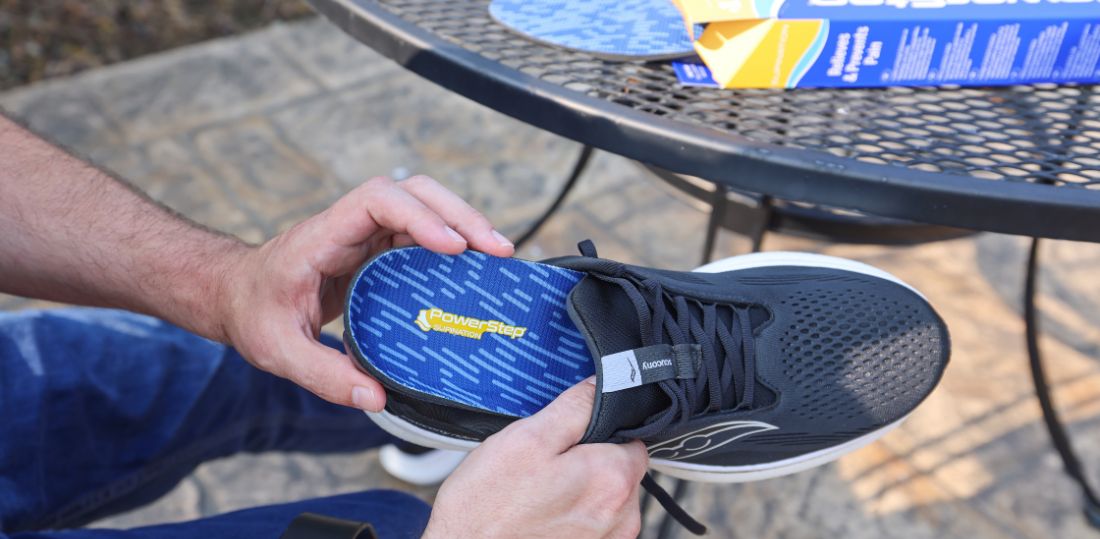
PowerStep Supination Insoles: Targeted Support for High Arches
Most conversations about foot alignment focus on overpronation, or excessive inward rolling. But some people experience the opposite movement pattern: the foot rolls outward too much, placing greater pressure along the outside edge of the foot. This is known as supination or underpronation.
Supination is commonly associated with high arches, reduced shock absorption, uneven pressure distribution, and instability through the foot and ankle. Because high-arched feet often make less contact with the ground, pressure may become concentrated beneath the heel, forefoot, and outer edge of the foot rather than being distributed evenly across the sole.
PowerStep® Supination Insoles are designed specifically for this often-overlooked foot type. These insoles provide targeted support intended to improve stability, redistribute pressure, and help counteract excessive outward foot rolling. Rather than relying on a small adhesive heel wedge or adding cushioning without structure, the Supination Insoles provide an integrated, full-length support system that works from the heel through the forefoot.
What Is Foot Supination?
Cleveland Clinic describes underpronation, or supination, as a gait pattern in which the foot rolls outward rather than transferring impact sufficiently toward the center of the foot. Because the foot stays relatively rigid, it may not absorb and distribute impact as efficiently. The result can be increased pressure on the outside edge of the foot, reduced stability, and added stress during standing, walking, or exercise.
Common Signs of Supination
You may have a supinated walking pattern if you notice:
- Excessive wear along the outer edges of your shoes
- High or rigid arches
- Pressure along the outside of the foot
- Repeated ankle rolling or instability
- Calluses beneath the heel, forefoot, or outer foot
- Foot fatigue during walking or standing
- Difficulty absorbing impact comfortably
High arches do not always cause symptoms, and not everyone with high arches needs treatment. However, supinated feet can be less adaptable and may increase the risk of pressure-related discomfort or ankle instability in some people.
Why High Arches and Supination Often Occur Together
A high-arched foot, also called pes cavus or cavus foot, maintains a pronounced arch even during weight-bearing. Unlike a flexible arch that lowers slightly to help distribute impact, a rigid high arch may make less contact with the ground. This reduced contact area can concentrate pressure beneath specific parts of the foot. Research and clinical guidance on painful high-arched feet suggest that abnormal plantar pressure distribution is an important contributor to discomfort, and that effective orthotic support works in part by redistributing those pressures.
High arches can also affect stability. Hospital for Special Surgery compares the high-arched foot to an uneven tripod, which can make the ankle more vulnerable to rolling or spraining. That combination of limited ground contact, concentrated pressure, and reduced adaptability is why basic cushioning alone may not provide enough support. People with supinated feet often need an insole that combines shock absorption with a structure designed specifically for high arches and outward rolling.
How PowerStep Supination Insoles Work

PowerStep Supination Insoles address multiple parts of the foot rather than focusing on a single pressure point. Their support system combines three primary features:
- An extended lateral wedge
- A high-arch support shell
- A built-in dancer’s pad
These components work together to encourage a more balanced foot position, increase contact beneath the arch, and reduce concentrated pressure in the forefoot.
Built-In Lateral Wedge for Outward Foot Rolling
The extended lateral wedge is one of the defining features of PowerStep Supination Insoles. A lateral wedge is positioned along the outside portion of the insole. Its purpose is to help shift weight medially, or slightly toward the inside of the foot, which may counter excessive outward rolling and support more balanced rearfoot alignment. For people with flexible high arches or feet that tend to roll outward, lateral wedging may be used as part of orthotic management to improve balance and help reduce recurrent instability.
Unlike many competing products that rely on a small adhesive wedge placed only beneath the heel, the PowerStep design integrates their plastic injection molded wedge directly into the insole and extends it along a larger portion of the foot.
This built-in construction offers several advantages:
- Consistent positioning inside the shoe
- Support that extends beyond the heel
- No separate adhesive piece to apply or reposition
- A more complete transition from rearfoot to forefoot
- Integrated support that works with the rest of the insole
The goal is not to force the foot into an unnatural position. Instead, the wedge is designed to support a more balanced movement pattern and reduce the excessive lateral loading associated with supination.
High-Arch Shell for Better Plantar Contact
The high-arch shell is shaped to support feet that do not make sufficient contact through the midfoot. When a high arch remains unsupported, pressure can become concentrated beneath the heel and metatarsal heads. Increasing contact beneath the arch may help distribute weight across a greater surface area.
Clinical trials recognize orthotic inserts as a conservative option for high arches because they can place the foot in a more favorable position and improve weight distribution. The PowerStep high-arch shell provides structured support rather than relying on soft foam that quickly compresses under body weight. It is designed to:
- Increase contact beneath the arch
- Support a high-arched foot shape
- Improve pressure distribution
- Create a more stable foundation
- Work with the lateral wedge to support alignment
This is particularly important for people who want cushioning but still need meaningful structure. An insole that feels soft without supporting the arch may reduce initial pressure but may not adequately address the mechanics contributing to uneven loading.
Dancer’s Pad for Targeted Forefoot Relief
Supinated feet frequently experience concentrated forefoot pressure. In some high-arched foot structures, the first metatarsal may sit lower than the others, changing how weight is distributed across the ball of the foot. The built-in dancer’s pad in PowerStep Supination Insoles is designed to offload the first metatarsal head while cushioning the central metatarsals.
This targeted design may help:
- Reduce pressure beneath the first metatarsal head
- Cushion the central forefoot
- Improve comfort during push-off
- Address pressure patterns associated with supinated feet
- Complement the high-arch shell and lateral wedge
- First ray cutout on the dancer's pad to further allow the foot to be placed in a more pronation positioning
The dancer’s pad does not work in isolation. Its placement is part of a larger support system intended to improve how pressure moves from the heel through the forefoot.
Research involving insoles for cavus feet has found that redistributing concentrated plantar pressure can improve comfort and reduce excessive loading in specific regions of the foot.
Shock-Absorbing Cushioning for Rigid, High-Arched Feet
High arches are often less flexible than neutral arches. That rigidity can reduce the foot’s natural ability to absorb impact during walking or running. PowerStep Supination Insoles include a shock-absorbing top cover designed to cushion impact while the underlying shell maintains structure and support. This combination is important because cushioning and support perform different jobs. Cushioning helps reduce impact stress, arch support increases contact and improves pressure distribution. the lateral wedge helps address outward rolling, and the dancer’s pad helps relieve targeted forefoot pressure. Together, these features create a more complete approach than soft cushioning alone.
Who May Benefit From PowerStep Supination Insoles?
PowerStep Supination Insoles are designed for individuals who experience high arches, outward foot rolling, or pressure patterns commonly associated with supinated feet. They may be appropriate for people who notice:
- High or rigid arches
- Excessive wear along the outside of shoes
- Lateral foot pressure
- Recurrent ankle instability
- Forefoot discomfort
- Concentrated pressure beneath the heel or ball of the foot
- Foot fatigue during prolonged standing or walking
- A need for both strong arch support and cushioning
They may also be useful for active individuals who want more stability during walking, exercise, work, or everyday movement. However, not every high arch or supinated foot requires the same treatment. Progressive arch changes, significant weakness, repeated ankle injuries, or neurological symptoms should be evaluated by a healthcare professional because these issues can sometimes be associated with an underlying neuromuscular condition.
Supination Insoles vs. Standard High-Arch Insoles
Standard high-arch insoles primarily focus on filling the space beneath the arch and improving cushioning. That may be sufficient for some people, especially those who have high arches without excessive outward rolling or forefoot pressure. PowerStep Supination Insoles add more targeted features.
| Feature | Standard High-Arch Insole | PowerStep Supination Insole |
|---|---|---|
| High-arch support | Usually | Yes |
| Shock-absorbing cushioning | Often | Yes |
| Built-in lateral wedge | Not always | Yes |
| Dancer’s pad | Rarely | Yes |
| Targets outward foot rolling | Limited | Specifically designed for it |
| Forefoot pressure relief | General cushioning | Targeted offloading and cushioning |
| Full-length integrated support | Varies | Yes |
This makes the Supination Insole a stronger option for users who need more than arch height alone.
How to Know Whether You Supinate
Shoe wear can provide clues, but it should not be the only way you evaluate your gait. Begin by looking at the soles of a frequently worn pair of shoes. If the outer heel and outside edge of the forefoot show noticeably greater wear, you may be placing more pressure laterally. You can also observe whether your ankles appear to roll outward, arches stay high while standing, your feet feel rigid rather than flexible, you frequently roll your ankles, or pressure accumulates beneath the outside edge of the foot.
A podiatrist, physical therapist, or other qualified healthcare provider can perform a more complete assessment by evaluating your foot structure, gait, strength, flexibility, and footwear. Professional evaluation is especially important if symptoms are new, worsening, affecting only one foot, or accompanied by weakness, numbness, balance changes, or repeated injuries.
How to Wear PowerStep Supination Insoles
For the best results, use PowerStep Supination Insoles in supportive footwear with enough interior space to accommodate a structured orthotic. Look for shoes with:
- A removable factory liner
- Adequate depth
- A stable heel counter
- A secure fit through the midfoot
- Enough room for the toes
- A supportive, cushioned midsole
Remove the existing shoe liner when possible before inserting the PowerStep orthotic. Make sure the insole lies flat and the heel sits securely against the back of the shoe. Because the insole includes a high-arch shell and corrective lateral support, it may feel more noticeable than a flat or soft insert during the first few wears.
If you are new to structured orthotics, begin with a gradual break-in period. Wear the insoles for a few hours on the first day, then slowly increase wear time as your feet adjust. Support should feel firm and noticeable, but it should not cause sharp pain, numbness, tingling, or worsening symptoms.
Additional Ways to Manage Supination and High Arches
Orthotic insoles can be an important part of a broader support plan, but they are not the only consideration. Depending on your needs, a healthcare provider may also recommend:
- Calf and plantar fascia stretching
- Ankle strengthening
- Balance training
- Peroneal muscle strengthening
- Supportive footwear
- Activity modifications
- Physical therapy
- Bracing for recurrent ankle instability
Foot and ankle conditioning exercises may help improve strength, flexibility, and stability, particularly when they are selected for your specific movement pattern.
When to See a Podiatrist
Schedule a professional evaluation if you experience frequent ankle sprains, progressive changes in arch height, persistent outer-foot pain, significant calluses beneath the heel or forefoot, difficulty walking comfortably, muscle weakness, numbness or tingling, or symptoms that do not improve with supportive footwear and orthotics. A healthcare provider can determine whether your supination is flexible or rigid, identify any underlying conditions, and recommend the most appropriate treatment.
A More Complete Solution for Supinated Feet
Supination requires a different support strategy than overpronation. Rather than controlling excessive inward rolling, an insole for cavus feet should help reduce lateral loading, improve contact beneath a high arch, cushion concentrated pressure points, and support a more stable stride. PowerStep Supination Insoles are designed around those specific needs.
For people with high arches, lateral instability, or excessive outward foot rolling, PowerStep Supination Insoles offer a specialized foundation designed to help every step feel more balanced, supported, and comfortable.
PowerStep Supination Insoles FAQs
Q: What are the best insoles for supination?
A: The best insoles for supination combine high-arch support, lateral stability, pressure redistribution, and cushioning.
Q: How do supination insoles help outward foot rolling?
A: Supination insoles use targeted support to encourage a more balanced foot position. The lateral wedge in PowerStep Supination Insoles helps shift weight medially, supporting rearfoot alignment and reducing excessive loading along the outside of the foot.
Q: Are PowerStep Supination Insoles good for high arches?
A: Yes. These insoles include a high-arch support shell designed to increase plantar contact and improve weight distribution for individuals with high arches.
Q: Can I wear supination insoles every day?
A: PowerStep Supination Insoles are designed for everyday use in compatible athletic, casual, and work shoes. New orthotic users may benefit from gradually increasing wear time during an initial adjustment period.
References
- Cleveland Clinic. “High Arch Feet (Pes Cavus): Causes, Symptoms & Treatment.”
https://my.clevelandclinic.org/health/diseases/high-arch-feet-pes-cavus - Cleveland Clinic. “Overpronation: What It Is, Causes & Treatment.”
https://my.clevelandclinic.org/health/diseases/22474-overpronation - Hospital for Special Surgery. “Cavus Foot: Symptoms and Treatment.”
https://www.hss.edu/health-library/conditions-and-treatments/list/cavus-foot - Burns, J., et al. “Effective Orthotic Therapy for the Painful Cavus Foot.”
https://pubmed.ncbi.nlm.nih.gov/16707631/ - Najafi, B., et al. “Mechanism of Orthotic Therapy for the Painful Cavus Foot Deformity.”
https://pubmed.ncbi.nlm.nih.gov/24450305/


